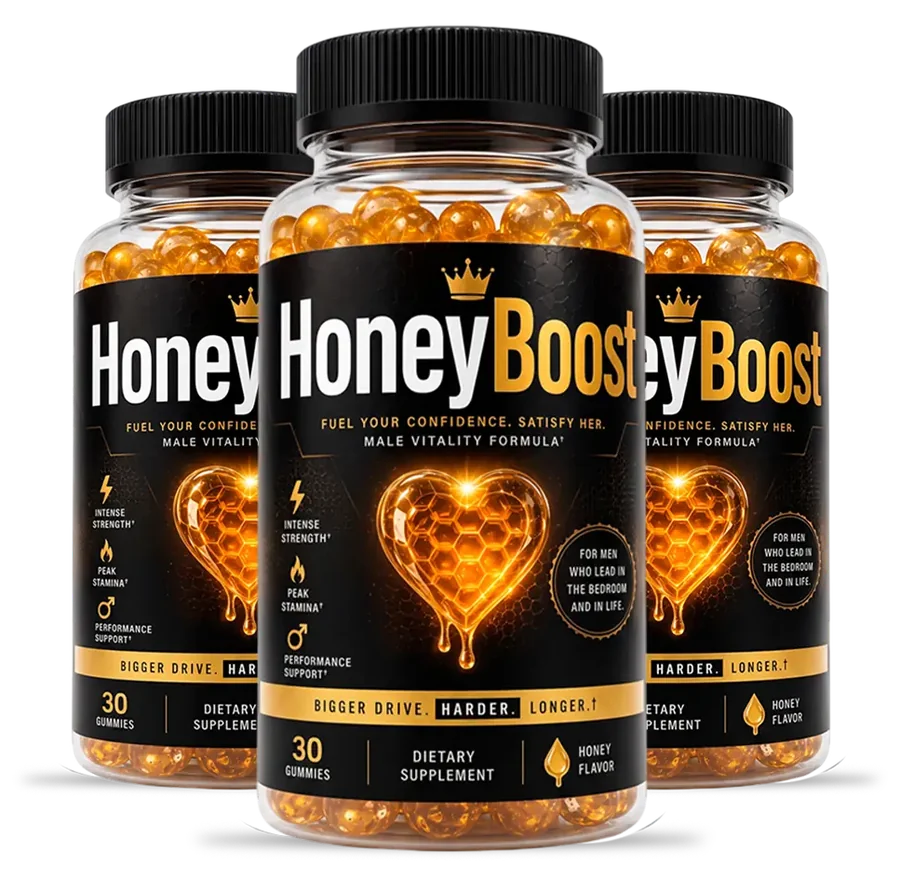
Ingredient profile
Mucuna pruriens and L-DOPA: what 9.8 mg in a HoneyBoost gummy means
Mucuna pruriens is a tropical bean, and the HoneyBoost label prints a seed extract standardized to 98% L-DOPA: 10 mg, so 9.8 mg of L-DOPA per gummy (10 x 98%). L-DOPA is the compound in Parkinson's medicines. A Dutch assessment could set no safe dose and flagged MAO-inhibitor and Parkinson's medicines. Ask a pharmacist first.
Written by the HoneyBoost label deskUpdated
The bean
What is mucuna pruriens?
Mucuna pruriens is a tropical climbing bean whose seeds contain L-DOPA, the same compound used in Parkinson's medicines.
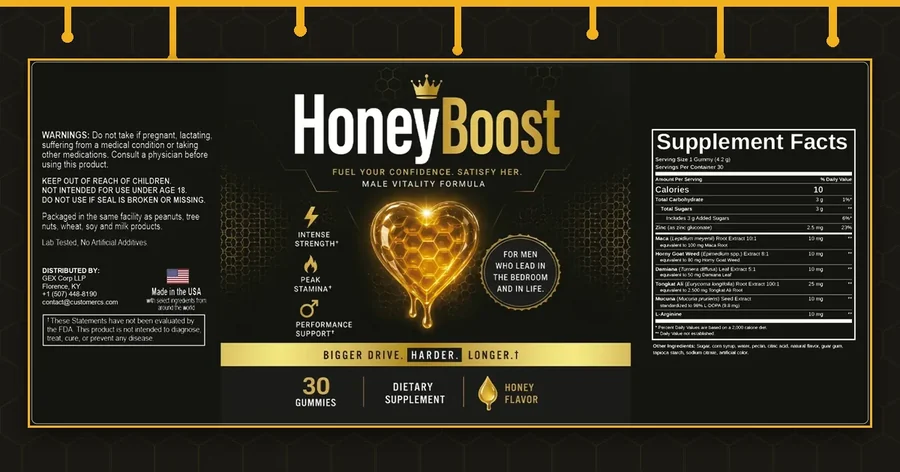
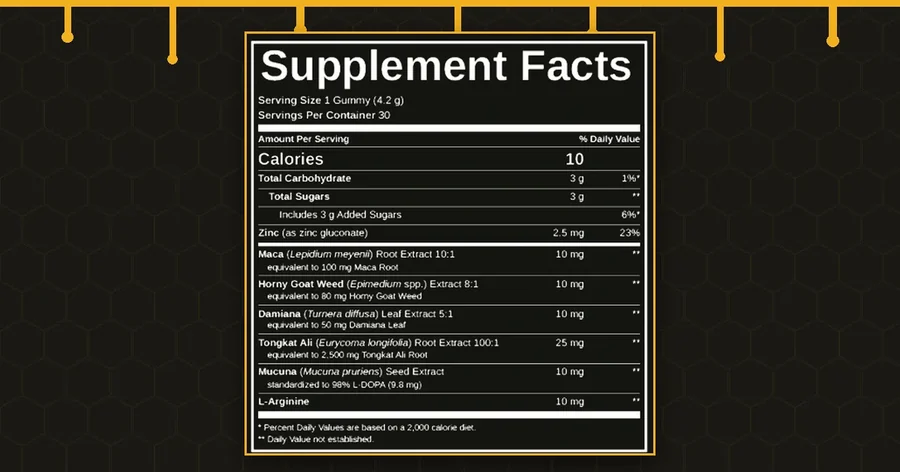
The HoneyBoost panel row reads "Mucuna (Mucuna pruriens) Seed Extract standardized to 98% L-DOPA (9.8 mg)", with 10 mg beside it (HoneyBoost label). The gummy is a dietary supplement, not a drug and not a capsule.
| Name on the label | Mucuna (Mucuna pruriens) Seed Extract standardized to 98% L-DOPA (9.8 mg) |
|---|---|
| What it is | An extract of a tropical bean; the label says it is standardised to 98% L-DOPA, so the 10 mg row holds 9.8 mg of L-DOPA (10 mg x 98%) |
| What it is sold for | Sold for male vitality |
| Amount per gummy (label) | 10 mg |
| Amount used in research | One uncontrolled study at 5 g of seed powder a day; a review of herbs and testosterone; a Dutch government risk assessment |
| What the studies found | In an uncontrolled study, 60 infertile men with psychological stress took 5 g a day of mucuna seed powder for three months; stress markers fell and sperm measures improved, but there was no placebo group. A review of herbs and testosterone rated mucuna moderate. A Dutch government risk assessment said it could not determine a safe dose, noted that product labels list levodopa at 15% to 40% of the extract, and flagged interactions with MAO-inhibitor and Parkinson's medicines. This label's 98% L-DOPA is a purified extract, a different thing from seed powder. |
| Main caution | Mucuna extracts are a source of L-DOPA, the same compound as in Parkinson's medicines. The Dutch assessment flags MAO-inhibitor and Parkinson's medicines, pregnancy, liver and kidney concerns. Ask a clinician first. |
Medicines first
Is mucuna safe with Parkinson's medicines and MAO inhibitors?
Ask a pharmacist before combining them, because the Dutch government risk assessment flagged interactions with both, and it could determine no safe dose of mucuna.
The assessment is RIVM's 2024 report. It noted that product labels list levodopa at 15% to 40% of the extract. It described the MAO-inhibitor and Parkinson's medicine interactions as theoretical, and advised avoiding mucuna in pregnancy, breastfeeding, and with liver or kidney problems (RIVM 2024, mucuna risk assessment).
The HoneyBoost row is standardized to 98%, a purified extract, far above that range.
Never stop or change a medicine because of a supplement. Ask your doctor or pharmacist first if you take Parkinson's, MAO-inhibitor, blood pressure, diabetes or blood-thinning medicines, nitrates or erectile-dysfunction drugs, or if you have a heart condition. The label says not to take the gummy with other medications.
The numbers
How much L-DOPA is in one HoneyBoost gummy?
One gummy holds 10 mg of mucuna seed extract, and at 98% that is 9.8 mg of L-DOPA (10 x 0.98).
The label prints no root or seed equivalent for this row (HoneyBoost label). The only study we read gave 5 g of seed powder a day. The gummy's 10 mg of extract is 0.2% of 5,000 mg (10/5,000), and the two materials differ, so the comparison shows scale, not equivalence.
- Maca (root equivalent)100 mg on the label
Studies: gelatinized maca 1,500 and 3,000 mg a day (12 weeks) and a maca extract at 2,400 mg a day; the label's 10 mg extract equals 100 mg of root (10 x 10). Studies used about 15 to 30 times the label amount. (Gonzales 2002, maca desire and T) (Zenico 2009, maca and mild ED)
- Horny goat weed80 mg on the label
No human trial of horny goat weed extract at this dose was found; the reviews describe mostly cell and animal work. No human trial range found. (Niu 2022, icariin review) (Meng 2026, icariin and ED)
- Damiana (leaf equivalent)50 mg on the label
No human trial of damiana alone was found; human data come only from herb blends. No human trial range found. (Szewczyk 2014, damiana)
- Tongkat ali (extract)25 mg on the label
Studies: 200 mg a day of extract for one to three months in two open-label studies; the label's row is 25 mg of extract (equal to 2,500 mg root). Studies used about 8 times the label amount. (Tambi 2012, tongkat ali LOH) (Tambi 2010, tongkat ali fertility)
- Mucuna (seed extract)10 mg on the label
Study: 5 g (5,000 mg) of seed powder a day for three months, uncontrolled; the label's row is 10 mg of an extract at 98% L-DOPA. Studies used about 500 times the label amount. (Shukla 2010, mucuna in men) (RIVM 2024, mucuna risk assessment)
- L-arginine10 mg on the label
Studies: 1,500 to 5,000 mg a day in men with mild to moderate ED (10 trials) and 6 g a day in one trial. Studies used about 150 to 500 times the label amount. (Rhim 2019, arginine ED) (Menafra 2022, arginine ED)
- Zinc (as gluconate)2.5 mg on the label
Reference levels: 11 mg a day recommended for men and 40 mg a day upper limit for adults (NIH); not study doses. A reference level, not a study dose: the label is 6% of the higher level. (NIH ODS, zinc) (Prasad 1996, zinc and T)
Log scale: each gridline is ten times the one before. Studied ranges are daily amounts from the trials linked on each row; rows marked as a reference show a reference level, not a study dose. A bar being far away does not mean the gummy is unsafe or useless; it means the study results cannot be borrowed for it, because none tested HoneyBoost or this combination.
The studies
What does the research say about mucuna for men?
The research is small and uncontrolled: one study gave 5 g of seed powder a day to 60 infertile men and had no placebo group.
The men, under psychological stress, took the powder for 3 months. Stress markers fell and sperm measures improved, but they were compared with healthy men, not a placebo group, so the change cannot be credited to mucuna (Shukla 2010, mucuna in men).
A review of herbs and testosterone rated mucuna "moderate", citing a 5,000 mg a day amount (Santos 2019, herbs and testosterone). We found no trial of the 10 mg extract in the gummy, and no trial tested HoneyBoost.
| Item | HoneyBoost label | Study we read |
|---|---|---|
| Material | Purified seed extract, 98% L-DOPA | Seed powder |
| Amount | 10 mg (9.8 mg L-DOPA) | 5,000 mg a day |
| Who | Adults 18+ | 60 stressed infertile men |
| Length | Not printed | 3 months |
| Placebo group | No trial | None |
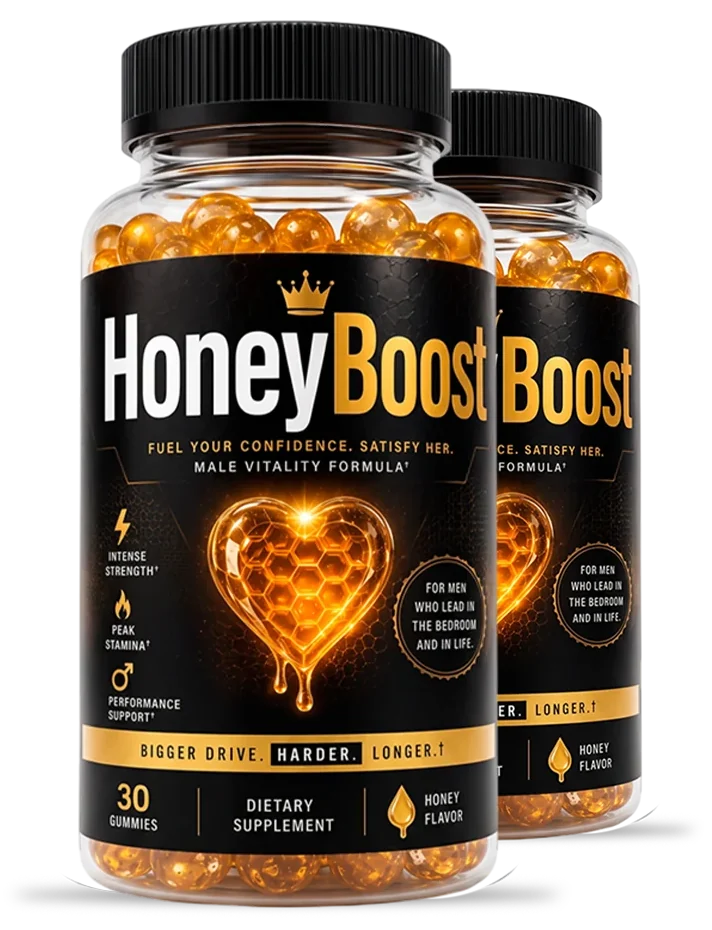
HoneyBoost gummies: 30 to a bottleOne gummy a day · 2, 3 or 6 bottles · from $49 a bottle · shipping shown at checkout
See the priceSafety
Who should avoid a mucuna gummy?
Anyone who is pregnant, breastfeeding, under 18, or has liver, kidney or heart problems should ask a clinician before use, and the label says the same about medical conditions.
Stop and get care for a racing heart, rash, swelling, or dark urine, yellow skin or eyes. Chest pain, fainting or trouble breathing: call 911. A painful erection, or one lasting 4 hours or more, is an emergency: go to the emergency room (Urology Care, priapism).
Another row, tongkat ali, is a possible rare cause of liver injury per NIH's LiverTox (LiverTox, tongkat ali). Sexual-enhancement supplements as a group have been found with hidden drug ingredients in FDA warnings (FDA tainted sexual products). We have no lab report for HoneyBoost and do not say it contains any.
Taking it
How is a mucuna gummy taken?
The wrap prints no suggested-use line, and the panel gives only a serving size of 1 gummy (4.2 g).
Follow the bottle and ask the order desk and a clinician, with your medicine list in hand. Erection problems can be an early sign of heart or blood-vessel disease (Diaconu 2020, ED and heart). More in medicine interactions and when to see a clinician.
Keep reading
Where do the other HoneyBoost ingredients fit?
Mucuna is one of seven active rows, and each has its own page.
Compare them on the formula page.
FAQ
HoneyBoost questions people ask
What is mucuna in HoneyBoost?
It is a seed extract of Mucuna pruriens standardized to 98% L-DOPA. The label prints 10 mg per gummy, so 9.8 mg of L-DOPA (10 x 98%). It is one of six extract rows in a gummy that is not a capsule.
Does mucuna interact with Parkinson's medicines?
A Dutch government assessment flagged possible interactions with Parkinson's and MAO-inhibitor medicines, which it described as theoretical. Ask a pharmacist before combining them. Never stop a prescribed medicine because of a supplement.
How much L-DOPA is in mucuna?
Product labels in the Dutch assessment listed levodopa at 15% to 40% of the extract. The HoneyBoost row is standardized to 98%, a purified extract, so 10 mg holds 9.8 mg of L-DOPA.
Is there a safe dose of mucuna?
The Dutch assessment said no safe dose can be determined. We found no study of the 10 mg extract, and the one study we read used 5 g of seed powder a day in 60 men without a placebo group.
Is mucuna the same as natural L-DOPA, so safe?
No. L-DOPA is a drug compound, and a plant source does not remove interaction or liver cautions. Ask a clinician before use, especially with Parkinson's or MAO-inhibitor medicines.
Does the HoneyBoost label say how to take it?
The panel gives a serving size of 1 gummy (4.2 g), but the wrap prints no suggested-use line. Follow the bottle and ask the order desk and a clinician. Do not take it if pregnant, lactating, under 18 or on other medications.
Who wrote this
Written and reviewed by
Pages built from the label, the seller's brief and linked NIH, FDA, CDC, FTC and peer-reviewed sources.
Last updated . Read our editorial standards and how we check reviews. This website is the information site of a U.S. stocking partner for HoneyBoost. It is not the manufacturer, and the label names GEX Corp LLP (Florence, Kentucky) as the distributor. We earn money when you buy through our order links.
Keep reading
More about HoneyBoost

U.S. stocking partner for HoneyBoost
Ready to look at HoneyBoost?
Check your medicines first, and ask a clinician if you are unsure. Then pick a pack: 2, 3 or 6 bottles of 30 gummies. Packs run $79, $69 and $49 a bottle with a 60-day money-back guarantee; confirm the total and shipping at checkout.
- Secure checkout on the seller's site
- 60-day money-back guarantee, per the seller
- Shipping shown at checkout