Guide
Extract ratio explained: what 10:1 and 100:1 mean on a label
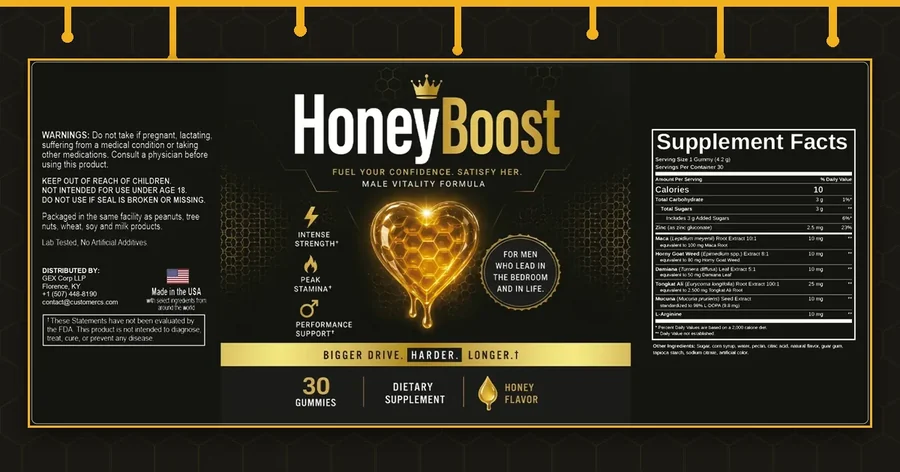
An extract ratio such as 10:1 says how many parts of raw plant were used to make 1 part of extract. It is a raw-material figure, not a strength or a dose. On the HoneyBoost label, 25 mg of a 100:1 tongkat ali extract is printed as equivalent to 2,500 mg of root (25 x 100).
Written by the HoneyBoost label deskUpdated
The basics
What does a 10:1 extract ratio mean?
A 10:1 extract is made from about 10 parts of raw plant for every 1 part of finished extract. The first number is the starting material, and the second is what is left after water, fiber and other matter are removed.
Think of brewing a strong tea and drying it to a powder. The ratio tells you how much went in, not how much of any one compound is in the powder.
That is why two 10:1 extracts can differ. The plant part, the solvent, the temperature and the drying method all change what ends up in the powder. A ratio alone cannot show those differences.
Ratio means "how much raw plant was used." It does not mean "how strong," "how pure" or "how much to take."
Reading the line
What does equivalent to mean on a supplement label?
"Equivalent to" is a multiplication: the extract amount times the ratio gives the weight of raw plant that was used to make it. It is a statement about the starting material, not about what is in the gummy.
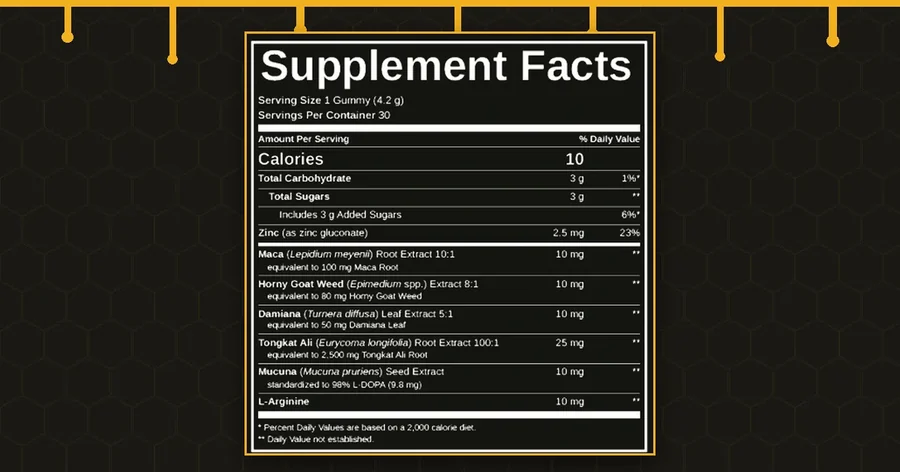
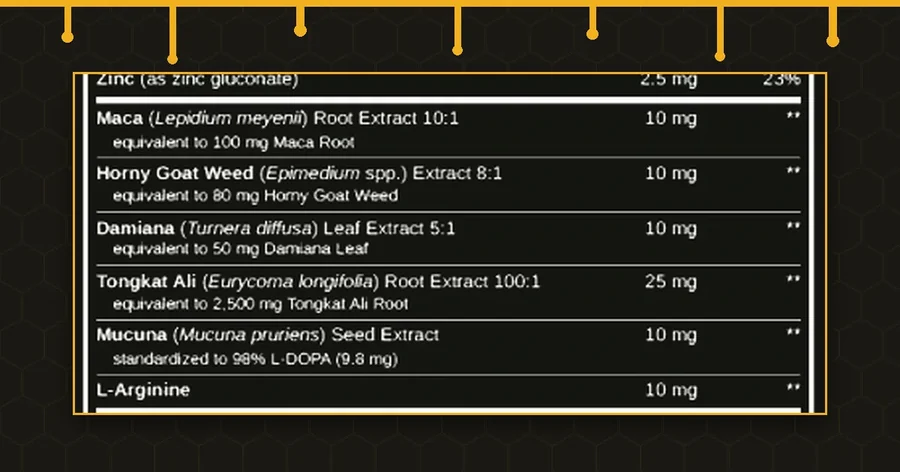
The HoneyBoost panel prints this line on four rows. For maca, 10 mg of extract at 10:1 is equivalent to 100 mg of root (10 x 10). The gummy does not hold 100 mg of root. It holds 10 mg of a concentrate that came from that much root (HoneyBoost label).
The four rows that print a ratio
| Row | Ratio | Extract | Equivalent to | The sum |
|---|---|---|---|---|
| Maca root | 10:1 | 10 mg | 100 mg root | 10 x 10 |
| Horny goat weed | 8:1 | 10 mg | 80 mg herb | 10 x 8 |
| Damiana leaf | 5:1 | 10 mg | 50 mg leaf | 10 x 5 |
| Tongkat ali root | 100:1 | 25 mg | 2,500 mg root | 25 x 100 |
Try the math
How do you work out the equivalent amount?
Multiply the extract in milligrams by the first number of the ratio. Pick a row below to see the sum drawn out next to what studies of that plant used.
The second bar is not a recommendation. It shows the amount a study gave to its volunteers, so you can see how far the gummy's extract sits from it.
The extract unpacks
10 mg extract in one gummy× 10= 100 mg of Maca root printed as the equivalent
Next to the amount studies used
Trials used 1,500 to 3,000 mg a day of maca powder and 2,400 mg of a dry extract
A ratio says how much raw herb went into the extract, not how strong it is.
| Row | Extract per gummy | Ratio | Printed equivalent | Studies used |
|---|---|---|---|---|
| Maca root | 10 mg | 10:1 | 100 mg | Trials used 1,500 to 3,000 mg a day of maca powder and 2,400 mg of a dry extract |
| Horny goat weed | 10 mg | 8:1 | 80 mg | No human dose found |
| Damiana leaf | 10 mg | 5:1 | 50 mg | No human dose found for damiana alone |
| Tongkat ali root | 25 mg | 100:1 | 2,500 mg | Two open-label studies used 200 mg a day of extract |
Extract mg × ratio = the equivalent the label prints (10 × 10 = 100, 10 × 8 = 80, 10 × 5 = 50, 25 × 100 = 2,500). Study amounts are what the linked trials gave, not what this gummy does; none tested HoneyBoost.
Row by row amounts are on the formula page, and the full panel is typed out on the supplement facts page.
The big number
What does a 100:1 extract mean?
A 100:1 extract used about 100 parts of raw material to make 1 part of extract. On the HoneyBoost label, that is the tongkat ali row: 25 mg of extract, printed as equivalent to 2,500 mg of root (25 x 100).
Read that carefully. The gummy holds 25 mg of powder. The 2,500 mg is the weight of root behind the powder, and a person swallowing the gummy takes in 25 mg. A big equivalent figure can look like a big dose, so it is worth saying plainly that it is not one.
When studies of tongkat ali gave an extract, they gave it as an extract. Two open-label studies used 200 mg a day of extract for one to three months, with no control group (Tambi 2012, tongkat ali LOH) (Tambi 2010, tongkat ali fertility). The gummy's 25 mg is one eighth of 200 mg (25/200). To compare like with like, put extract next to extract, not extract next to root.
No trial tested HoneyBoost, so these numbers describe a gap in the label, not a result.
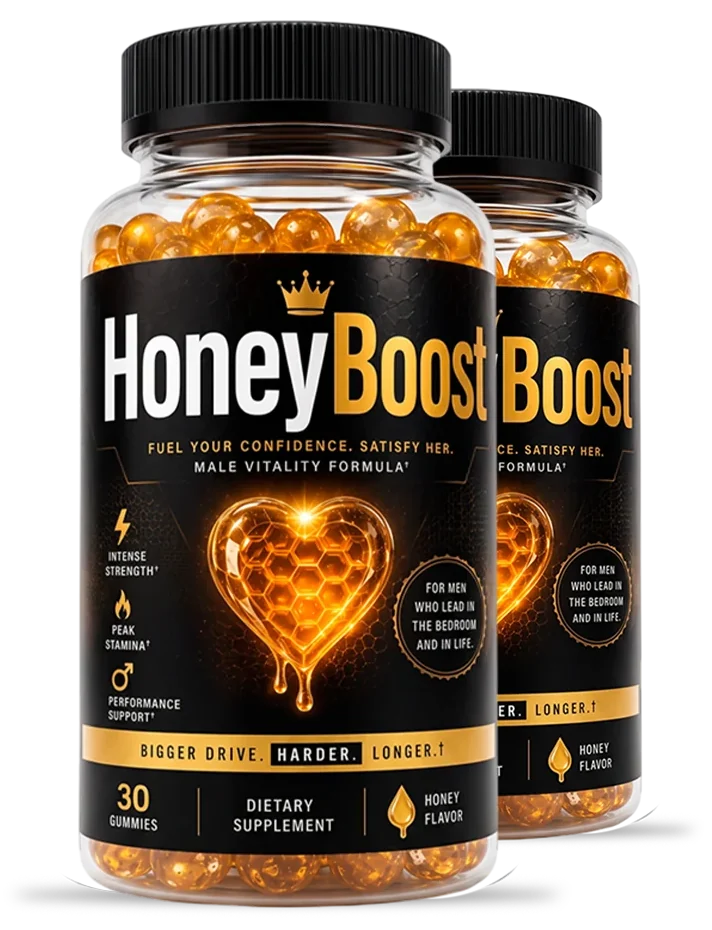
HoneyBoost gummies: 30 to a bottleOne gummy a day · 2, 3 or 6 bottles · from $49 a bottle · shipping shown at checkout
See the priceA common mix-up
Does a higher extract ratio mean a stronger supplement?
No. A higher ratio means more raw plant was used per part of extract, and nothing more. It can be paired with a tiny amount of extract, so the total effect, if any, may still be small.
Three things decide what a person actually takes in:
- The extract amount. A 100:1 extract at 25 mg and a 10:1 extract at 10 mg are different amounts of powder.
- The compounds in it. The label may state a standard, such as a percent of one compound. HoneyBoost does this for mucuna only.
- The plant part and method. Root, leaf and seed carry different compounds, and solvents pull out different ones.
A ratio of 5:1 for damiana and 100:1 for tongkat ali cannot be compared as a ranking. The plants are different, the parts are different, and no source we read ranks extracts by ratio.
A different kind of line
Why does the mucuna row have no ratio?
The mucuna row is labeled by a standard instead of a ratio: 10 mg of seed extract "standardized to 98% L-DOPA," which the panel gives as 9.8 mg (10 x 98%). No root or seed equivalent is printed.
A standard names how much of one compound the extract holds. A ratio names how much raw plant went in. They answer different questions, and the mucuna line answers only the first. The L-arginine and zinc rows are single substances and need neither.
The horny goat weed row prints 8:1 but does not say how much icariin, the compound reviews usually study, is in the 10 mg (Niu 2022, icariin review). The label also does not say who tested any percentage.
Your own checks
How do you read any extract label?
Find the milligrams of extract first, then the ratio, then any standard, and only then the "equivalent to" line. The last one is the easiest to misread.
Find the extract amount
This is what is in one serving. On the HoneyBoost panel the six extract rows add up to 10 + 10 + 10 + 25 + 10 + 10 = 75 mg a gummy.
Read the ratio as a starting weight
Multiply it out yourself and check that it matches the printed equivalent.
Look for a standard
If a row names a percent of one compound, ask who measured it. A lab report for the batch is how that is shown, and none is on file for this gummy.
Compare with a study only like for like
Study doses are often a powder or a different extract. Check which one before comparing numbers.
Studies of single plants do not show what a six-extract gummy does, and a ratio cannot fill that gap. Erection problems, low sexual desire and low testosterone have medical causes, so talk with a clinician about them. See when to see a clinician.
Ask a doctor or pharmacist before adding any supplement. Chest pain, fainting or trouble breathing: call 911. An erection lasting 4 hours or more is an emergency: go to the emergency room.
FAQ
Extract ratio questions
What does 10:1 mean on a supplement label?
It means about 10 parts of raw plant were used to make 1 part of extract. For HoneyBoost's maca row, 10 mg of 10:1 extract is printed as equivalent to 100 mg of root (10 x 10). It describes the starting material, not the strength of the powder.
Is a 100:1 extract better than a 10:1 extract?
Not on that fact alone. The ratio says how much raw plant went in, not how much of any compound came out. Plant, part, solvent and the extract amount all matter, and no source we read ranks extracts by ratio.
How do you calculate the equivalent amount?
Multiply the extract in milligrams by the first number of the ratio. Tongkat ali: 25 mg x 100 = 2,500 mg. Damiana: 10 mg x 5 = 50 mg. The result is the raw material used, not an amount in the gummy.
Does 2,500 mg of tongkat ali root mean I get 2,500 mg?
No. The gummy holds 25 mg of extract. The 2,500 mg is the weight of root that went into making it. Studies used 200 mg of extract, so compare the 25 mg with 200 mg, which is one eighth.
Why does the mucuna row show a percent instead of a ratio?
It is labeled by standard: 10 mg of extract at 98% L-DOPA, which is 9.8 mg. A standard names one compound in the extract, while a ratio names the raw plant used. The label prints no root or seed equivalent for mucuna.
Does the label say how much icariin the horny goat weed has?
No. The row prints 8:1 and 10 mg, equivalent to 80 mg of herb, but not the icariin content. The reviews we read mostly cover icariin, so that missing figure matters when you compare the row with research.
Who wrote this
Written and reviewed by
Pages built from the label, the seller's brief and linked NIH, FDA, CDC, FTC and peer-reviewed sources.
Last updated . Read our editorial standards and how we check reviews. This website is the information site of a U.S. stocking partner for HoneyBoost. It is not the manufacturer, and the label names GEX Corp LLP (Florence, Kentucky) as the distributor. We earn money when you buy through our order links.
Keep reading
More about HoneyBoost
U.S. stocking partner for HoneyBoost
Ready to look at HoneyBoost?
Check your medicines first, and ask a clinician if you are unsure. Then pick a pack: 2, 3 or 6 bottles of 30 gummies. Packs run $79, $69 and $49 a bottle with a 60-day money-back guarantee; confirm the total and shipping at checkout.
- Secure checkout on the seller's site
- 60-day money-back guarantee, per the seller
- Shipping shown at checkout