Ingredient profile
Maca root extract for men: what 10 mg in a HoneyBoost gummy means
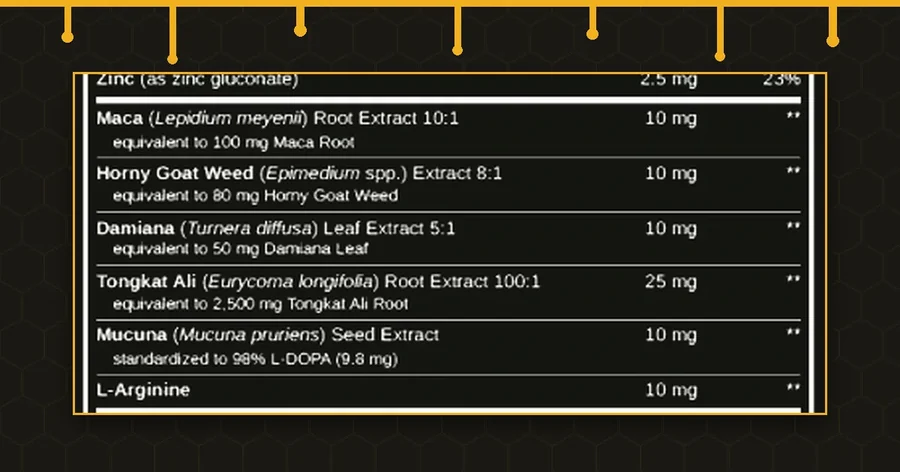
Maca root extract comes from a Peruvian root, Lepidium meyenii. Each HoneyBoost gummy prints 10 mg of a 10:1 extract, equal to about 100 mg of root (10 x 10). Trials gave 1,500 mg or more of maca a day, so the root equivalent is about 7% of that (100/1,500). No trial tested HoneyBoost.
Written by the HoneyBoost label deskUpdated
The plant
What is maca root extract?
Maca root extract is a concentrate made from the root of Lepidium meyenii, a plant grown in the high Andes of Peru. It is sold in powders, capsules and gummies as a supplement.
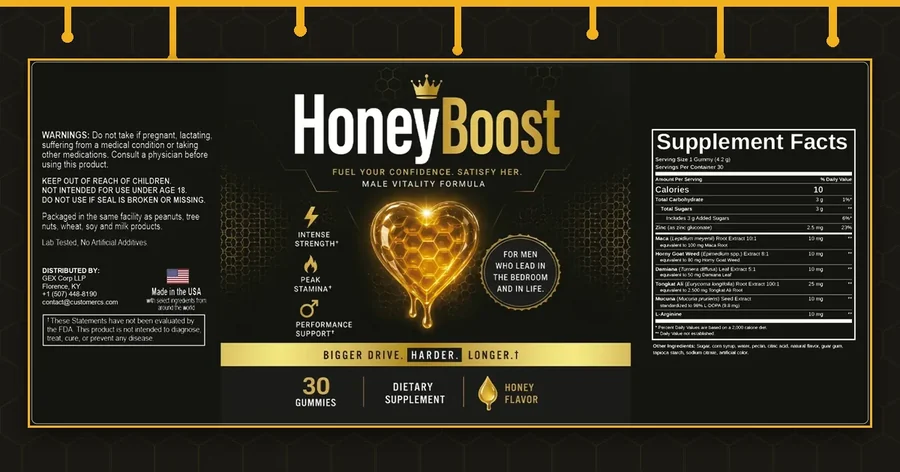
The HoneyBoost panel row reads "Maca (Lepidium meyenii) Root Extract 10:1", with 10 mg beside it (HoneyBoost label). The product is a gummy, not a capsule, a pill or a drug. The label does not say who made the extract or how much of any one compound it holds.
The FDA does not approve supplements before they are sold, and a supplement is not made to treat a disease (FDA 101 supplements). It is not a treatment for erection problems or low testosterone.
| Name on the label | Maca (Lepidium meyenii) Root Extract 10:1 |
|---|---|
| What it is | An extract of a Peruvian root; at 10:1 the label says 10 mg of extract is equivalent to 100 mg of maca root (10 mg x 10) |
| What it is sold for | Sold for male vitality |
| Amount per gummy (label) | 10 mg |
| Amount used in research | Four trials in a systematic review; a 12-week trial at 1,500 and 3,000 mg a day; a 12-week trial at 2,400 mg a day in mild ED |
| What the studies found | A systematic review of four randomised trials found limited evidence that maca affects sexual function. In a 12-week trial of men aged 21 to 56, 1,500 mg or 3,000 mg a day raised self-rated sexual desire from week 8 while testosterone did not differ from placebo. In 50 men with mild erectile dysfunction, 2,400 mg a day raised a questionnaire score by 1.6 points against 0.5 for placebo. A review of herbs and testosterone did not support maca for testosterone. The gummy's 10 mg of extract equals 100 mg of root. |
| Main caution | We did not find a safety monograph that we could read for maca; ask a clinician if you take medicines or have a medical condition. |
The amount
What does a 10:1 maca extract mean in HoneyBoost?
A 10:1 extract used about 10 parts of root for every 1 part of extract. Here, 10 mg of extract is printed as equivalent to 100 mg of maca root (10 x 10).
That 100 mg is the weight of root behind the powder. The gummy holds 10 mg of extract. Pick maca below to see the sum next to the trial amounts.
The extract unpacks
10 mg extract in one gummy× 10= 100 mg of Maca root printed as the equivalent
Next to the amount studies used
Trials used 1,500 to 3,000 mg a day of maca powder and 2,400 mg of a dry extract
A ratio says how much raw herb went into the extract, not how strong it is.
| Row | Extract per gummy | Ratio | Printed equivalent | Studies used |
|---|---|---|---|---|
| Maca root | 10 mg | 10:1 | 100 mg | Trials used 1,500 to 3,000 mg a day of maca powder and 2,400 mg of a dry extract |
| Horny goat weed | 10 mg | 8:1 | 80 mg | No human dose found |
| Damiana leaf | 10 mg | 5:1 | 50 mg | No human dose found for damiana alone |
| Tongkat ali root | 25 mg | 100:1 | 2,500 mg | Two open-label studies used 200 mg a day of extract |
Extract mg × ratio = the equivalent the label prints (10 × 10 = 100, 10 × 8 = 80, 10 × 5 = 50, 25 × 100 = 2,500). Study amounts are what the linked trials gave, not what this gummy does; none tested HoneyBoost.
All four ratios are explained on the extract ratios page.
The evidence
What does the evidence say about maca for men?
The evidence is small and uncertain. A review of four randomized trials called the evidence for maca and sexual function "limited" (Shin 2010, maca sexual function).
Two trials are the ones people usually cite, and both gave far more than the gummy holds:
- Self-rated desire. In a 12-week trial of men aged 21 to 56, 1,500 mg or 3,000 mg a day of gelatinized maca raised self-rated sexual desire from week 8, while testosterone did not differ from placebo (Gonzales 2002, maca desire and T).
- Mild erection problems. In 50 men with mild erectile dysfunction, 2,400 mg a day of a dry maca extract for 12 weeks raised a five-question score by 1.6 points, against 0.5 for placebo (Zenico 2009, maca and mild ED).
Both were small, short trials of one ingredient at one dose. No trial tested HoneyBoost, so none of this is a result for the gummy.
A review of herbs and testosterone did not support maca for testosterone (Santos 2019, herbs and testosterone). The label makes no testosterone claim in those words, and neither do we.
Label vs trials
How does the HoneyBoost amount compare with the trial doses?
The gummy's maca is a small fraction of what the trials gave. In root terms, 100 mg is about 7% of 1,500 mg (100/1,500) and about 3% of 3,000 mg (100/3,000).
Against the 2,400 mg of dry extract, the gummy's 10 mg is about 0.4% (10/2,400). That is rough, because the trial's extract may have a different ratio. It shows scale, not what is "enough."
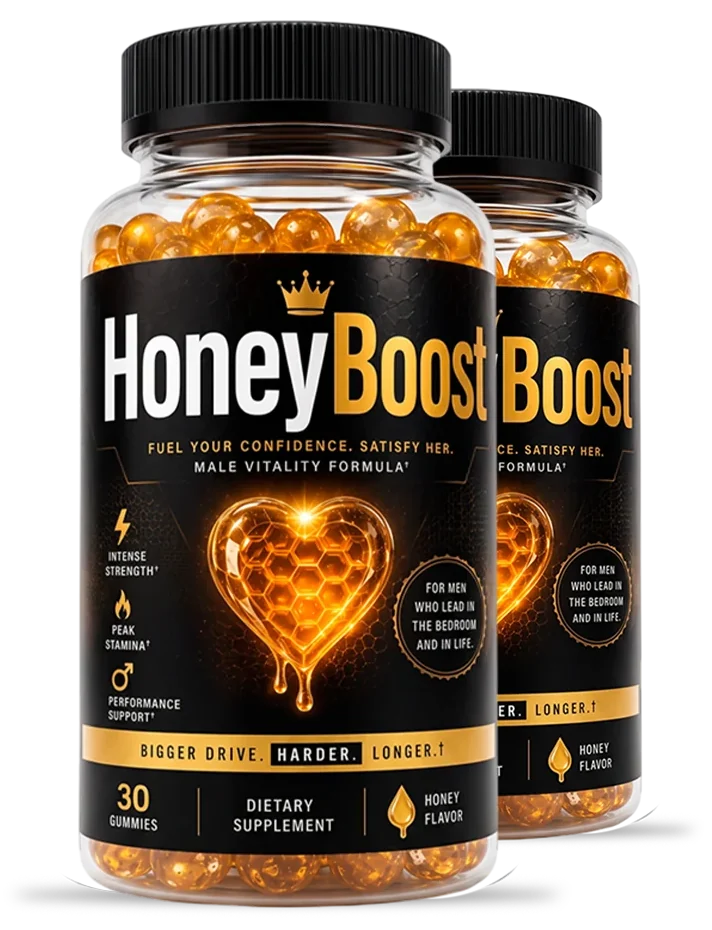
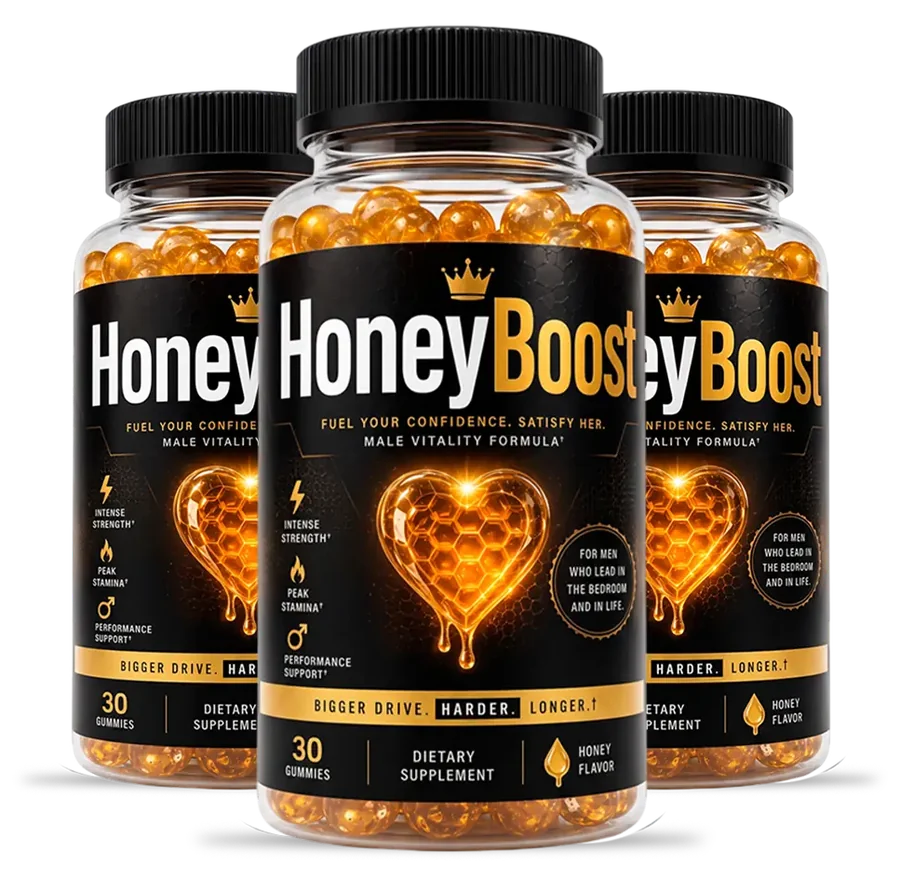
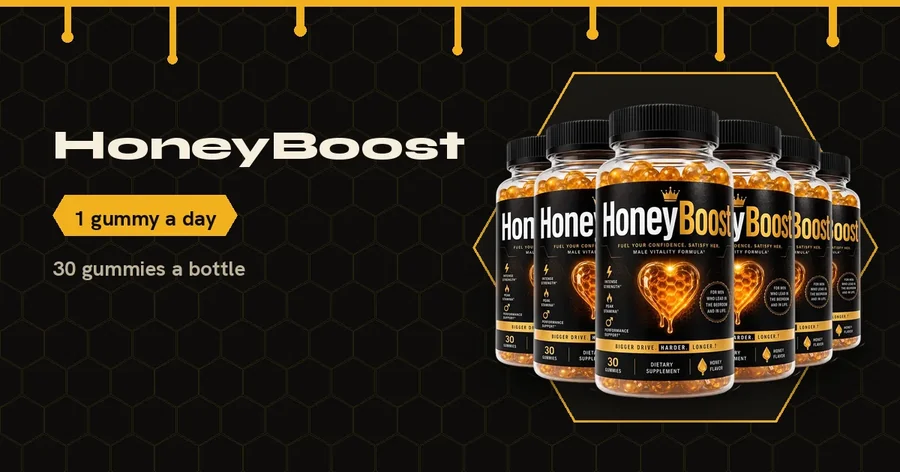
HoneyBoost gummies: 30 to a bottleOne gummy a day · 2, 3 or 6 bottles · from $49 a bottle · shipping shown at checkout
See the priceThe label's claims
Does maca explain the HoneyBoost taglines?
No. The wrap prints lines such as “PERFORMANCE SUPPORT†” and “BIGGER DRIVE. HARDER. LONGER.†”, and we found no trial that tested those claims with this gummy.
The dagger leads to the FDA statement: these statements have not been evaluated, and the product is not intended to diagnose, treat, cure or prevent any disease. Maca is one of six rows, and the trials above looked at maca alone at much higher doses.
Safety
Who should ask a clinician before taking maca?
Anyone who takes a prescription medicine, has a medical condition or is thinking about a supplement for erection problems or low sexual desire should ask first. We did not find a safety source for maca that we could read, so we state no safe amount.
The label says not to take HoneyBoost if pregnant, lactating, suffering from a medical condition or taking other medications, and not under 18.
Erection problems can be an early sign of heart or blood-vessel disease (Mayo Clinic, ED). Low testosterone is diagnosed with symptoms plus repeated morning blood tests, not by guessing (Endocrine Society testosterone). A clinician can look for causes first. See when to see a clinician and medicine interactions.
Ask your doctor or pharmacist first about nitrates, erectile dysfunction drugs, blood pressure, Parkinson's, MAO-inhibitor, diabetes or blood-thinning medicines. Chest pain, fainting or trouble breathing: call 911. A painful erection, or one lasting 4 hours or more, is an emergency: go to the emergency room. The wrap prints no suggested-use line.
The other rows
What are the other ingredients to look at next?
Maca is one of six extract rows plus zinc, and each row has its own evidence and its own gap between label and trial.
See the formula page for all of them side by side.
FAQ
Maca questions
What is maca root extract?
Maca root extract is a concentrate of the root of Lepidium meyenii, a Peruvian plant. In HoneyBoost, 10 mg of a 10:1 extract is printed per gummy, equal to 100 mg of root. It is a gummy, not a capsule.
How much maca is in HoneyBoost?
Each gummy has 10 mg of maca root extract at 10:1, which the label says is equivalent to 100 mg of root (10 x 10). The gummy holds the 10 mg of extract, not the 100 mg of root.
Did a trial find that maca raises desire?
In one 12-week trial of men aged 21 to 56, 1,500 or 3,000 mg a day of maca raised self-rated desire from week 8. Testosterone did not differ from placebo. A review called the evidence limited, and no trial tested HoneyBoost.
Is the HoneyBoost maca dose the same as the studied dose?
No. Trials used 1,500 to 3,000 mg a day of maca powder, or 2,400 mg of a dry extract. The gummy's root equivalent is about 7% of 1,500 mg (100/1,500), and the 10 mg extract is far smaller than 2,400 mg.
Does maca raise testosterone?
We found no source that shows it does. The 12-week trial saw no difference from placebo, and a review of herbs and testosterone did not support maca. Low testosterone is diagnosed with repeated morning blood tests by a clinician.
Who wrote this
Written and reviewed by
Pages built from the label, the seller's brief and linked NIH, FDA, CDC, FTC and peer-reviewed sources.
Last updated . Read our editorial standards and how we check reviews. This website is the information site of a U.S. stocking partner for HoneyBoost. It is not the manufacturer, and the label names GEX Corp LLP (Florence, Kentucky) as the distributor. We earn money when you buy through our order links.
Keep reading
More about HoneyBoost
U.S. stocking partner for HoneyBoost
Ready to look at HoneyBoost?
Check your medicines first, and ask a clinician if you are unsure. Then pick a pack: 2, 3 or 6 bottles of 30 gummies. Packs run $79, $69 and $49 a bottle with a 60-day money-back guarantee; confirm the total and shipping at checkout.
- Secure checkout on the seller's site
- 60-day money-back guarantee, per the seller
- Shipping shown at checkout